
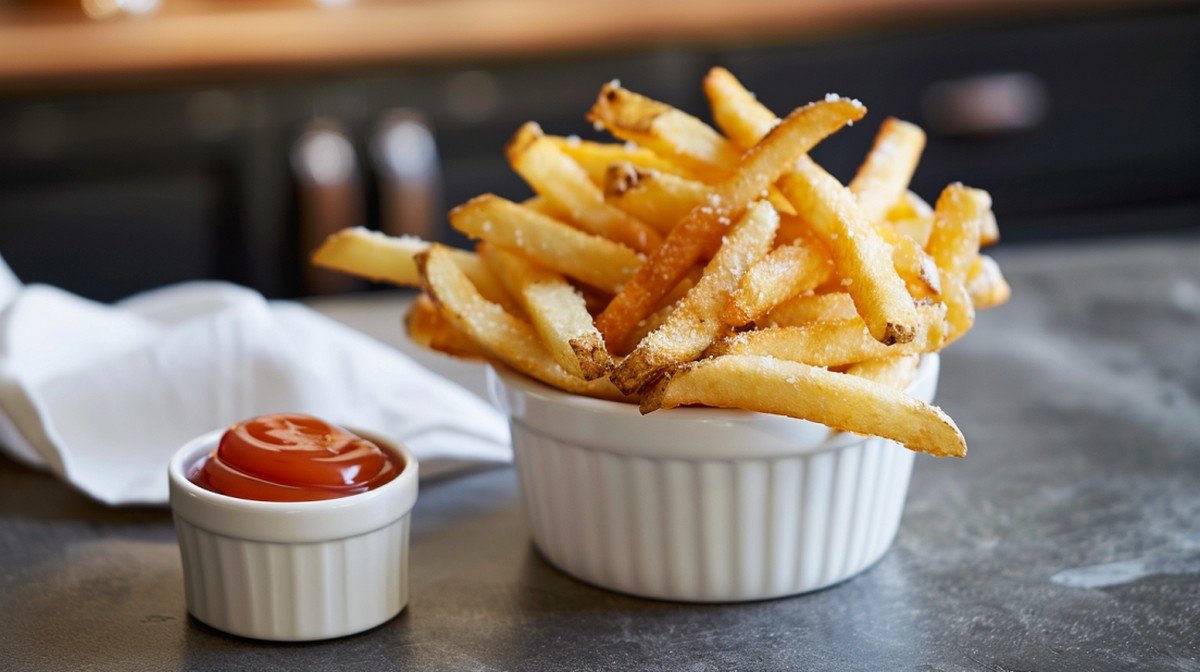
There's a reason you can't stop at just one fry from McDonald's. That golden crunch. That salty pull. That impossible-to-recreate flavor — until now.
This homemade McDonald's french fries recipe nails the exact taste, texture, and addictive crunch you crave. I've made these more times than I care to admit, and the secret isn't fancy at all — it's just two frying steps and one ingredient most people skip. Once you taste them straight out of the oil, the drive-thru loses its appeal real quick.
Quick Answer
The trick to McDonald's-style french fries is double frying with a beef tallow blend. The first fry cooks the potato through, and the second fry creates that signature shatter-crisp shell.
Use russet potatoes only
Soak to remove starch
Fry twice at two different temps
Salt immediately after the second fry
Serve hot — they don't wait
Why This Recipe Works
McDonald's fries are engineered for crunch, and the science behind them is actually pretty simple at home. It comes down to three things: the right potato, the right fat, and the right method.
Russet potatoes have the highest starch content, which means they crisp up dramatically while staying fluffy inside. Soaking them in cold water pulls out excess surface starch, so they don't turn gummy or stick together in the oil.
The double-fry technique is the real game-changer. The first low-temp fry cooks the inside without browning. The second high-temp fry blasts the outside into that golden, glassy shell that makes you reach for another one. Add a small amount of beef tallow to your frying oil, and suddenly you've got that unmistakable McDonald's flavor — savory, slightly meaty, addictive.
Most copycat versions skip the tallow. That's the mistake.
If you love nailing the McDonald's flavor at home, these fries are just the start — check out our 10 McDonald's copycat recipes that taste just like the real thing for more drive-thru classics you can make better in your own kitchen.
What It Tastes Like
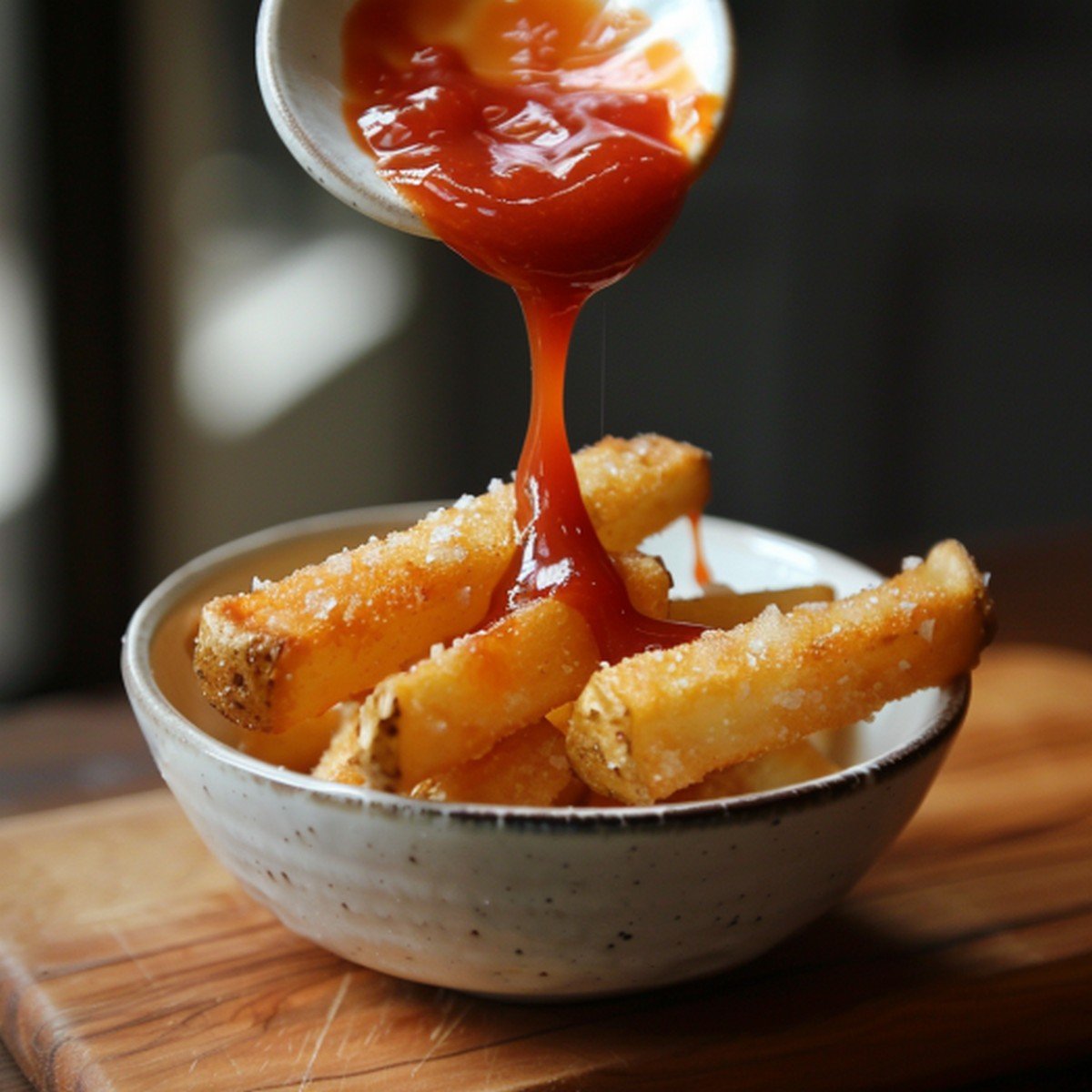
The first bite is all crunch — sharp and audible, like real fast food fries. Then the inside hits: pillowy, soft, almost creamy. The salt clings to every edge, and there's a faint savory richness from the tallow that makes your brain say "more, now." They taste exactly like the bottom of the fry box at McDonald's, only fresher and hotter.
Ingredients You'll Need
4 large russet potatoes (about 2 pounds)
6 cups vegetable oil (for frying)
2 tablespoons beef tallow
1 tablespoon white vinegar (for soaking)
1 teaspoon fine sea salt
½ teaspoon table salt (for finishing)
Why These Ingredients Matter
Russets are non-negotiable — they hold their shape and crisp like nothing else. The vinegar in the soaking water keeps the cell walls firm so the fries stay sturdy through both fries. Beef tallow is the McDonald's secret weapon for flavor; even two tablespoons in your oil completely changes the taste. Fine sea salt sticks better than coarse, which is why fast-food fries always taste evenly seasoned.
How to Make It
Step 1: Cut and Soak the Potatoes
Peel the russets and cut them into ¼-inch sticks — keep them as uniform as possible. Drop them in a large bowl of cold water with the white vinegar and let them soak for at least 30 minutes. This is what gives you that classic shape and snap.
Step 2: Blanch in Water
Drain the potatoes and bring a large pot of salted water to a gentle simmer. Add the fries and cook for 4 minutes — they should be just tender but not falling apart. Drain carefully and spread them on a tray to dry. This step is what mimics the McDonald's pre-cook process.
Step 3: First Fry
Heat the vegetable oil and beef tallow together to 325°F. Fry the potatoes in batches for 4–5 minutes, just until they look pale and slightly soft. Don't let them brown. Pull them out, drain on paper towels, and let them rest for at least 15 minutes (or up to a few hours).
Step 4: Second Fry
Bring the oil up to 375°F. Fry the potatoes again, in batches, for 3–4 minutes — until they turn deep golden and crisp up loud. Lift them out, shake off the oil, and immediately toss with fine sea salt while they're piping hot.
What to Look For
You want a deep amber-gold color and a glassy, brittle shell. If they bend, the second fry needs more time. Listen for the crackle — that's the sound of fast-food fries done right.
Common Mistakes
Skipping the soak — you'll get soggy, sticky fries
Frying too hot on the first round — they'll brown outside but stay raw inside
Salting before the second fry — the salt won't stick
Pro Tips
Always fry in small batches. Crowding drops the oil temperature and ruins the crunch.
Use a thermometer. The temperature gap between the two fries is everything.
Let the fries rest fully between fries — this dries the surface and creates the shell.
Ingredient Swaps
No beef tallow? Use 2 tablespoons of bacon fat for a similar savory note.
Air fryer version: skip the deep fry, brush with oil + tallow, and air fry at 400°F for 18 minutes.
For a vegetarian-friendly version, use refined coconut oil instead of tallow — it adds a faint richness.
Variations
Garlic Parmesan Fries: toss the finished fries with grated parm and garlic powder.
Cajun Spice Fries: add 1 teaspoon Cajun seasoning to the salt mix.
Truffle Fries: drizzle with truffle oil right before serving.
Storage
These fries are best eaten immediately — they lose their crunch within an hour. If you need to make them ahead, complete the first fry, refrigerate the par-cooked fries for up to 24 hours, then do the second fry right before serving. Store leftovers in an airtight container and reheat in a 425°F oven for 5–7 minutes to revive the crunch. Avoid the microwave at all costs.
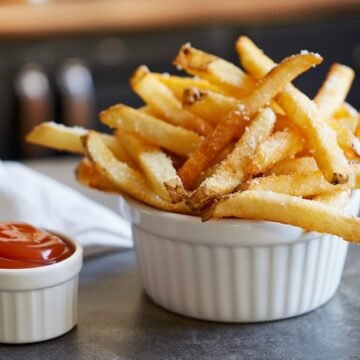
McDonald's French Fries
Ingredients
- 4 large russet potatoes
- 6 cups vegetable oil
- 2 tablespoons beef tallow
- 1 tablespoon white vinegar
- 1 teaspoon fine sea salt
- ½ teaspoon table salt
Instructions
- Cut potatoes into ¼-inch sticks and soak in cold water with vinegar for 30 minutes.
- Blanch fries in salted simmering water for 4 minutes, then drain and dry.
- Heat oil and tallow to 325°F. Fry in batches for 4–5 minutes until pale. Drain and rest 15 minutes.
- Heat oil to 375°F. Fry again for 3–4 minutes until deep golden.
- Toss immediately with fine sea salt and serve hot.
Notes
Resting between fries is what creates the shatter-crisp shell.
Common Questions
Why are McDonald's fries so addictive?
A combination of beef tallow flavor, double frying, and salty crunch creates a craveable mix that's hard to replicate without those exact steps.
Can I bake these instead of frying?
You can, but you'll lose the signature shatter. Bake at 425°F for 25 minutes, flipping halfway, after tossing in oil and tallow.
What kind of oil does McDonald's actually use?
McDonald's uses a canola oil blend with natural beef flavor. The beef tallow swap at home recreates that taste better than any other shortcut.
Do I really need to soak the potatoes?
Yes. Soaking is what removes the surface starch that causes sticking and sogginess.
Can I use frozen fries?
You can double-fry frozen fries for a similar effect, but starting from raw potatoes gives you the most authentic copycat result.
Why are mine soggy?
Either the oil wasn't hot enough, the batch was too crowded, or the fries weren't dried before frying.
You Might Also Like
- Crispy Hash Browns Like McDonald's
- Homemade McChicken Sandwich
- Crispy Homemade Chicken Nuggets
- Chick-fil-A Sauce Copycat
- 10 McDonald's Copycat Recipes
- Garlic Ginger Stir Fry Sauce
- 7 Best Burger Sauces You Need to Try at Home
- Ultime guide Asian Best SAuces
- 10 Best Sauces for Steak That Beat Any Steakhouse
Final Thoughts
These fries are a small project, not a quick weeknight side — but the payoff is genuinely worth it. Once you taste them, you'll understand why people obsess over McDonald's fries. The good news? Now you can make them whenever you want, without leaving the kitchen.
If you're saving ideas for later, don't forget to pin this recipe.

Jake Carter
Crave the restaurant version? I build the at-home one worth repeating.
Recipe developer & copycat flavor obsessive
I recreate the fast-food and restaurant flavors people miss most — then simplify them into recipes that feel doable, nostalgic, and genuinely satisfying at home.
Meet Jake & explore more recipes

Leave a Reply