
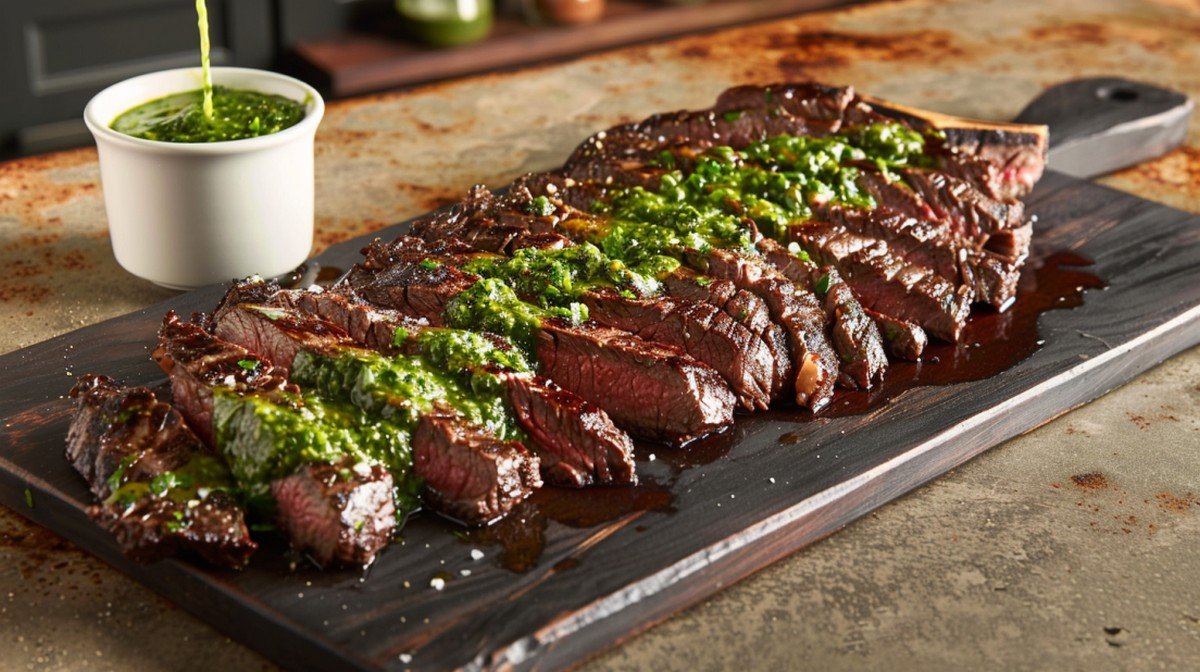
Stop what you're doing.
If you've ever eaten at Texas de Brazil and spent the rest of the meal obsessing over that bright green herbaceous sauce they pour over everything — this is the recipe you've been looking for.
I made this on a Sunday afternoon with a bunch of parsley I needed to use up, and it tasted so close to the original I immediately made a second batch.
This Chimichurri sauce Copycat changes the way you think about what a sauce can do to a piece of meat.
Quick Answer
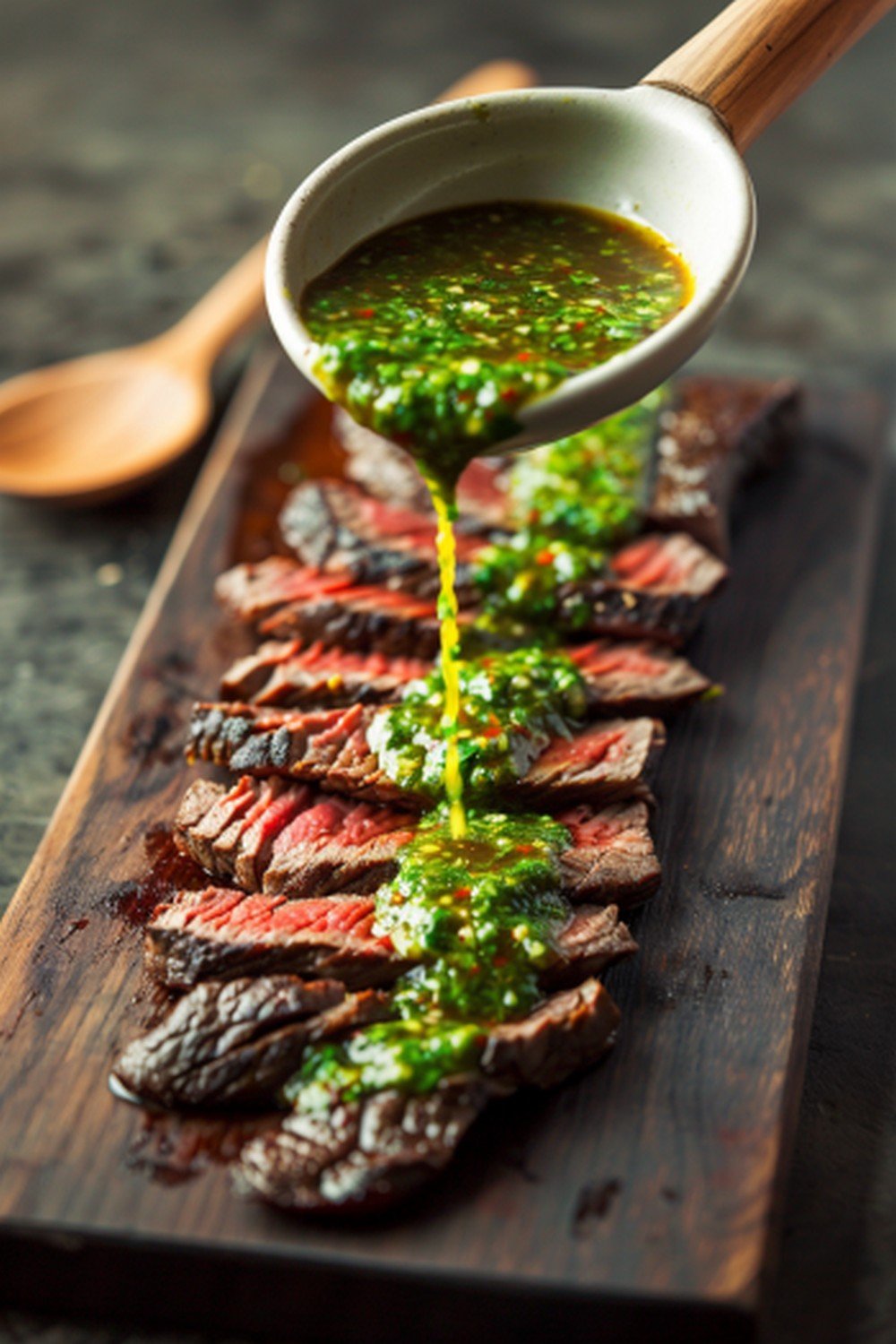
Texas de Brazil chimichurri is a bright herbaceous green sauce made with fresh parsley, garlic, olive oil, red wine vinegar, red pepper flakes, and oregano. It takes 10 minutes, requires no cooking, and transforms any steak, chicken, or roasted vegetable into a restaurant-quality plate at home.
- Steakhouse Chimichurri Sauce Copycat
- Garlic Butter Steak Sauce Recipe
- Cowboy Butter Sauce Recipe
- Best Grilling Sauces for Summer Cookouts
- Garlic Herb Compound Butter Recipe
Make a big batch — it keeps for a week and gets better every day.
Why This Recipe Works
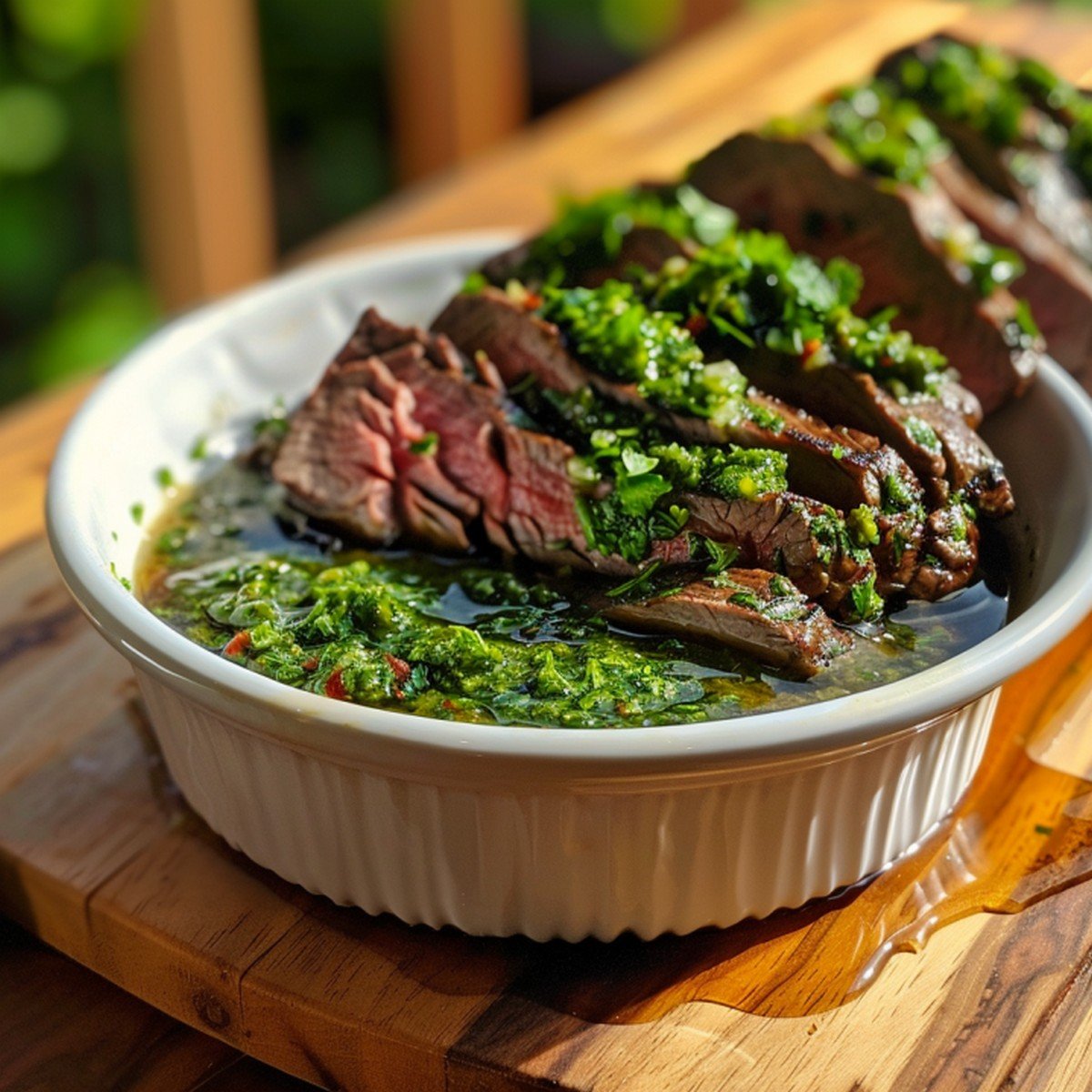
The secret to Texas de Brazil's chimichurri is restraint. Real chimichurri is not a blender sauce. It's a chopped herb sauce where each ingredient stays distinct, creates texture, and delivers a different flavor note in every bite.
Fresh flat-leaf parsley is non-negotiable. The grassy brightness is what makes chimichurri instantly recognizable. Curly parsley doesn't have enough flavor and goes mushy when chopped fine.
Garlic must be fresh — never powder, never jarred. The raw bite of freshly minced garlic is what gives chimichurri its depth. It mellows after 30 minutes of resting in the olive oil, becoming rounder and more integrated.
Red wine vinegar is the acid backbone. It brightens every ingredient around it and stops the sauce from tasting flat or oily. Too much makes it sharp. The right amount makes everything pop.
Extra virgin olive oil should be good quality here — you'll taste it directly. It carries the flavor of every herb and makes the sauce pourable without being runny.
The oregano adds a slightly earthy, almost Mediterranean note that distinguishes this from an Argentine-style chimichurri and gives it that Texas de Brazil signature depth.
This is exactly the flavor that makes Texas de Brazil's sauce impossible to stop eating.
Why You'll Keep Making This
- Ready in 10 minutes with zero cooking
- Works on steak, chicken, shrimp, and roasted vegetables
- Gets better the longer it sits
- One batch covers an entire dinner party
- Tastes exactly like the restaurant version
What It Tastes Like
The first thing that hits is the brightness — fresh, grassy parsley cut through with the sharp edge of raw garlic. Then the olive oil rounds everything out and carries the herb flavor across your palate.
The texture is chunky and coarse, not smooth — little pieces of parsley and garlic that you can feel. It coats steak like a vinaigrette but clings better.
What lingers is the red wine vinegar acidity and a gentle warmth from the pepper flakes — the kind of finish that makes you want another bite of whatever it's covering.
Ingredients You'll Need
- 1 cup fresh flat-leaf parsley, tightly packed
- 4 garlic cloves, minced
- ⅓ cup extra virgin olive oil
- 3 tablespoons red wine vinegar
- 1 teaspoon dried oregano
- ½ teaspoon red pepper flakes
- ½ teaspoon kosher salt
- ¼ teaspoon black pepper
Why These Ingredients Matter
Fresh flat-leaf parsley is the soul of this sauce. It must be fresh, must be flat-leaf, and must be finely chopped by hand or pulsed briefly in a food processor — not blended smooth. The texture matters.
Fresh garlic gives the sauce its backbone. Mince it as fine as you can — you want it distributed throughout every spoonful, not in large chunks.
Extra virgin olive oil carries the flavor and gives the sauce its body. Use the best quality you have — it's worth it here.
Red wine vinegar is what separates chimichurri from plain herb oil. It adds acidity, brightness, and balance.
Dried oregano adds a subtle earthy herbal note. Fresh oregano is too aggressive — dried is correct here.
Red pepper flakes add warmth without making it spicy. Increase to 1 teaspoon if you want genuine heat.
How to Make It
Step 1: Prep the parsley Remove stems and finely chop the parsley leaves. You want pieces small enough to distribute evenly through the sauce but not so fine they become paste. Aim for roughly ⅛ inch pieces. The kitchen starts smelling like a steakhouse the moment you start chopping.
Step 2: Mince the garlic Mince garlic as fine as possible. Run your knife through it twice. For extra-fine results, sprinkle a pinch of salt on the minced garlic and drag the flat of your knife across it to create a paste. This is where the depth of the sauce gets built — don't rush this step.
Step 3: Combine Add parsley and garlic to a bowl. Pour in olive oil and red wine vinegar. Add oregano, pepper flakes, salt, and black pepper. Stir well. The sauce will look loose — that's correct. It tightens as it rests.
Step 4: Rest Cover and let rest at room temperature for at least 30 minutes before serving. One hour is better. Overnight is best. This is the moment the garlic mellows and the flavors merge — patience is the secret ingredient.
What to Look For
The sauce should be bright green with visible texture. The olive oil and vinegar should be fully integrated — no separation. When you spoon it over meat, it should cling slightly rather than run off immediately.
Common Mistakes to Avoid
Blending the sauce smooth loses the texture that makes chimichurri distinctive — pulse briefly or chop by hand. Using dried parsley instead of fresh produces a flat, muted sauce. Not letting it rest means the garlic stays sharp and the flavors never integrate properly.
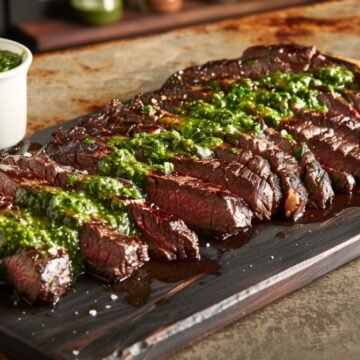
Texas de Brazil Chimichurri Copycat
Ingredients
- 1 cup fresh flat-leaf parsley tightly packed
- 4 garlic cloves minced
- ⅓ cup extra virgin olive oil
- 3 tablespoons red wine vinegar
- 1 teaspoon dried oregano
- ½ teaspoon red pepper flakes
- ½ teaspoon kosher salt
- ¼ teaspoon black pepper
Instructions
- Finely chop parsley leaves — aim for ⅛ inch pieces, not paste.
- Mince garlic as fine as possible. Use the flat of your knife to create a near-paste.
- Combine parsley and garlic in a bowl. Add olive oil, red wine vinegar, oregano, pepper flakes, salt, and pepper. Stir well.
- Cover and rest at room temperature for at least 30 minutes before serving.
- Taste and adjust salt or vinegar before serving.
Notes
Bring to room temperature before serving if refrigerated.
Keeps in the refrigerator for up to 7 days.
Pro Tips
Make it the day before — overnight resting in the refrigerator transforms good chimichurri into exceptional chimichurri. Always bring it back to room temperature before serving. Add a tablespoon of finely minced shallot for extra savory depth. For a brighter color, add a small handful of fresh cilantro to the parsley.
Ingredient Swaps
No fresh parsley? Half parsley and half fresh cilantro works beautifully for a more South American profile. Red wine vinegar can be replaced with sherry vinegar for a slightly more complex, nutty result. For a milder garlic flavor, use roasted garlic instead of raw — it will be sweeter and more mellow.
Make It Your Way
Spicy Chimichurri — double the red pepper flakes and add a fresh red chili, finely minced. Intense heat that builds slowly.
Chimichurri Butter — mix 2 tablespoons of chimichurri into softened butter. Roll in plastic wrap and refrigerate. Slice over hot steak straight from the grill.
Chimichurri Marinade — thin the sauce with an extra tablespoon of olive oil and use it to marinate chicken or shrimp for 2 hours before grilling.
Creamy Chimichurri — stir 2 tablespoons of Greek yogurt into the finished sauce for a creamier, more spreadable version that works beautifully as a sandwich spread.
Storage & Meal Prep
Store covered in the refrigerator for up to 7 days. The color will darken slightly as it ages but the flavor only improves. Always bring back to room temperature and stir well before serving — the olive oil will solidify in the cold. Do not freeze — the fresh parsley breaks down and the texture becomes mushy.
Common Questions
Is chimichurri the same as pesto? No — chimichurri uses parsley, olive oil, vinegar, and garlic with no nuts or cheese. Pesto uses basil, pine nuts, parmesan, and olive oil. They're completely different sauces from different culinary traditions.
Can I use a food processor? Yes — pulse the parsley and garlic 5–6 times until roughly chopped, then add the remaining ingredients and pulse 2–3 more times. Do not blend smooth. The texture is what makes chimichurri distinctive.
How spicy is this recipe? With ½ teaspoon of red pepper flakes it's very mild — more warmth than heat. It's accessible for anyone. Double the flakes for a genuinely spicy version.
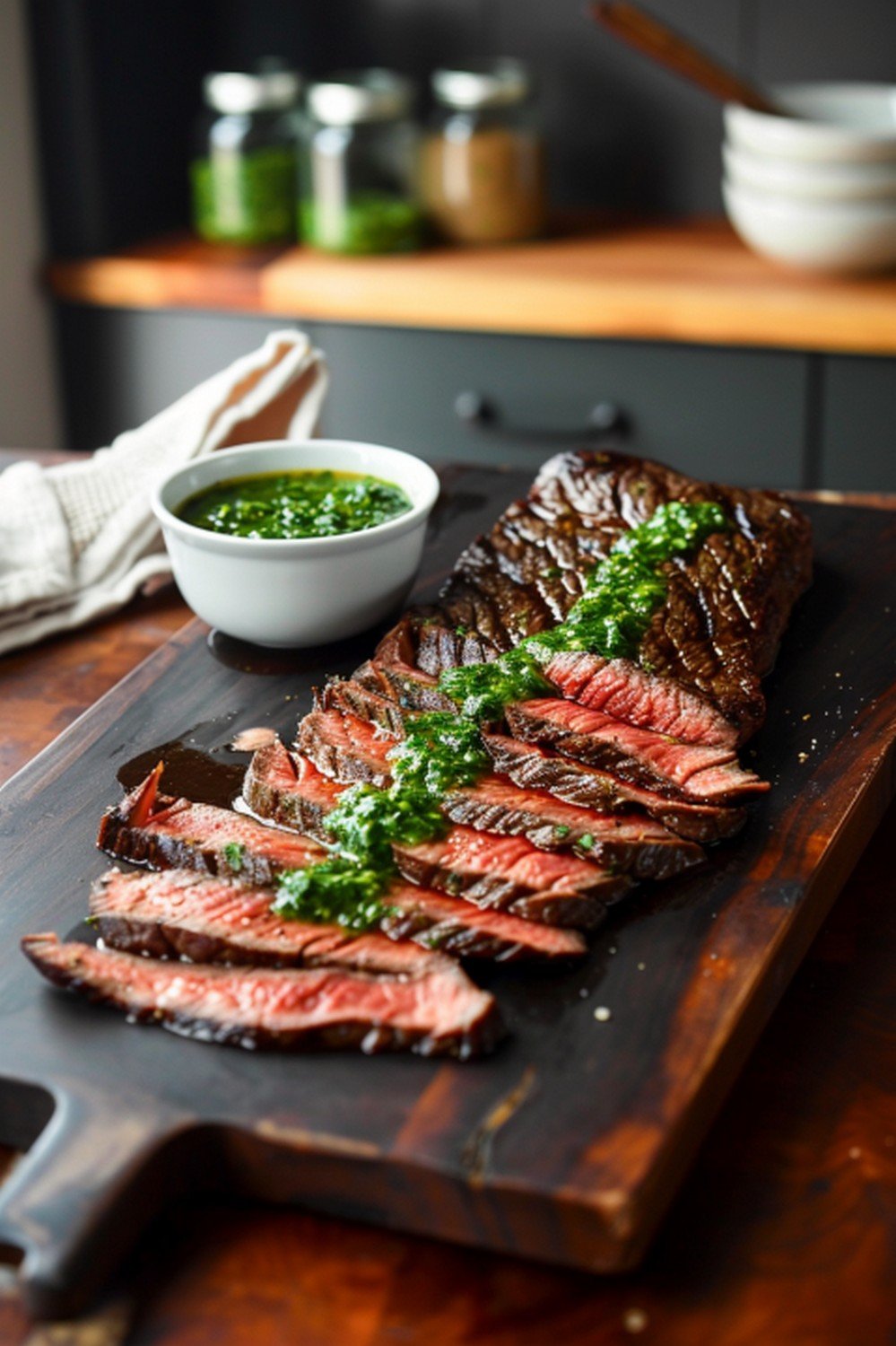
What's the best meat to serve chimichurri with? Skirt steak and flank steak are the classic pairing — the bold flavor of the chimichurri stands up to the intense beefy flavor of these cuts. It also works beautifully on chicken thighs, grilled shrimp, lamb chops, and roasted potatoes.
Why does my chimichurri taste too acidic? Too much vinegar or not enough resting time. Add another tablespoon of olive oil to balance, and let the sauce rest at room temperature for at least an hour before serving.
Can I make chimichurri ahead of time? Absolutely — it's better when made ahead. Make it the day before, refrigerate overnight, and bring to room temperature 30 minutes before serving.
You Might Also Like
- Wingstop Lemon Pepper Sauce Copycat
- Wingstop Korean BBQ Sauce Copycat
- Best Wing Sauces Ranked — From Classic to Game-Changing
- Hot Honey Glazed Chicken Tenders
- The Viral Classic Fry Sauces
- The Best Wingstop Copycat Recipes at Home
- 5-Minute Burger Sauce Recipe
- Chicken Fajita Plate Better Than TAkeout
The first time you put this on a piece of steak at home, you'll understand why people make special trips to Texas de Brazil. Make a big batch. It disappears fast.
You'll want this saved for later.

Jake Carter
Crave the restaurant version? I build the at-home one worth repeating.
Recipe developer & copycat flavor obsessive
I recreate the fast-food and restaurant flavors people miss most — then simplify them into recipes that feel doable, nostalgic, and genuinely satisfying at home.
Meet Jake & explore more recipes



Leave a Reply