
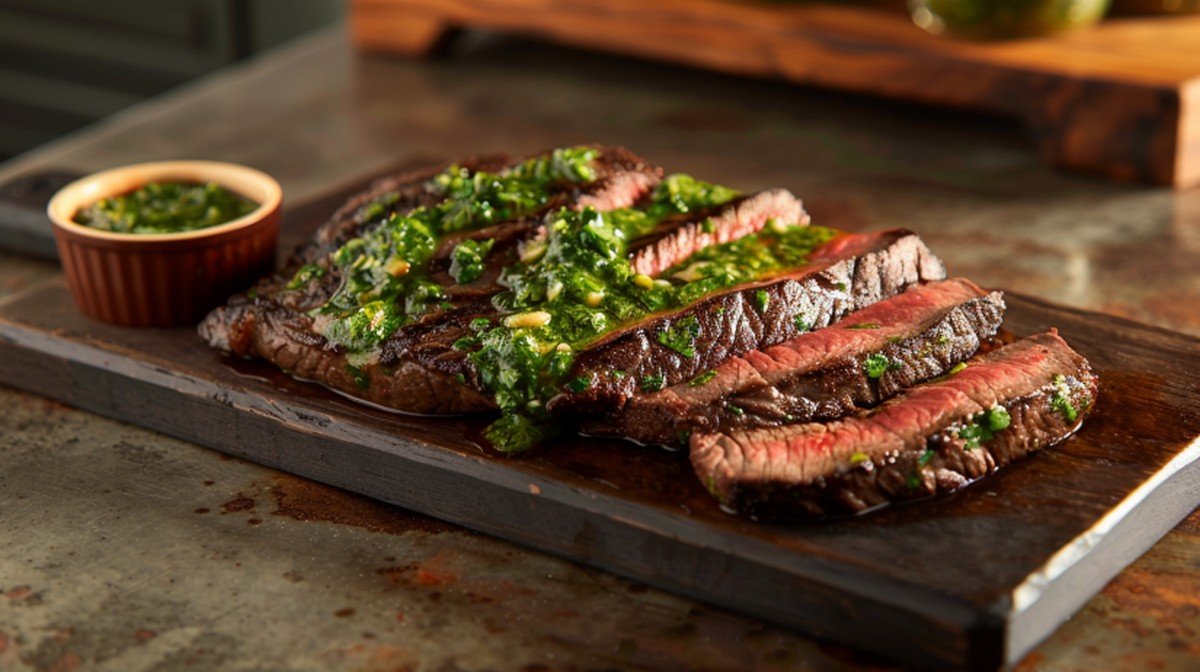
Once you make this yourself, the jarred version stops making sense.
steakhouse chimichurri Sauce Copycat is the herb sauce that professional grill chefs use as a finishing sauce, a marinade, and a table condiment simultaneously — and once you understand what makes a great chimichurri different from a mediocre one, you'll never make a bad batch again.
The difference is in the technique, not the ingredients. And the technique takes about 10 minutes.
Quick Answer
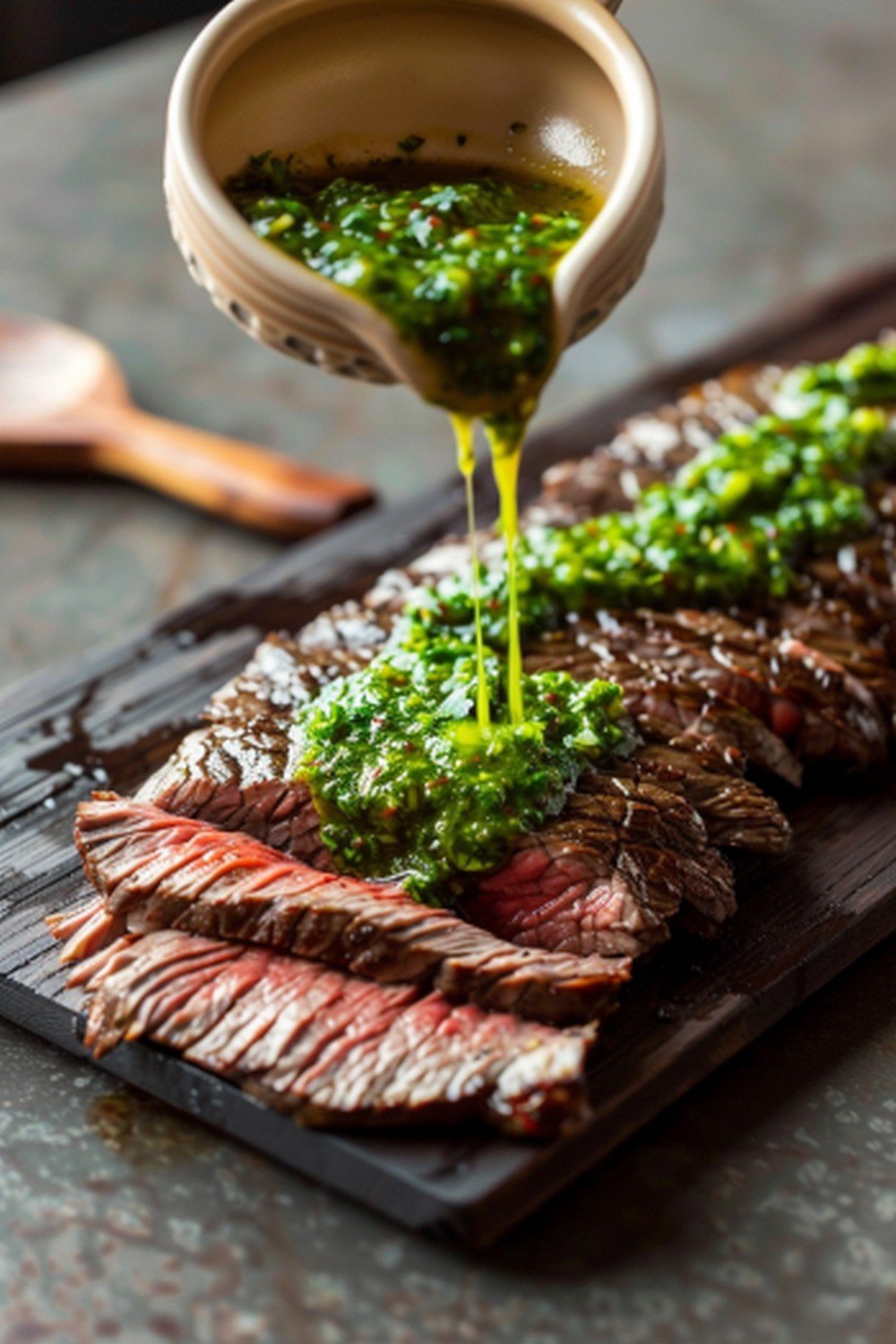
Steakhouse chimichurri sauce is made with fresh flat-leaf parsley, garlic, extra virgin olive oil, red wine vinegar, dried oregano, red pepper flakes, salt, and black pepper — chopped by hand or briefly pulsed, never blended smooth, and rested for at least 30 minutes. It takes 10 minutes and transforms any grilled meat into a restaurant-quality plate.
- Texas de Brazil Chimichurri Copycat
- Garlic Butter Steak Sauce Recipe
- Cowboy Butter Sauce Recipe
- Garlic Herb Compound Butter Recipe
- 10 Sauces for Steak — Ranked From Classic to Bold
Make extra. It gets better every day it sits.
Why This Recipe Works
The texture is the technique.
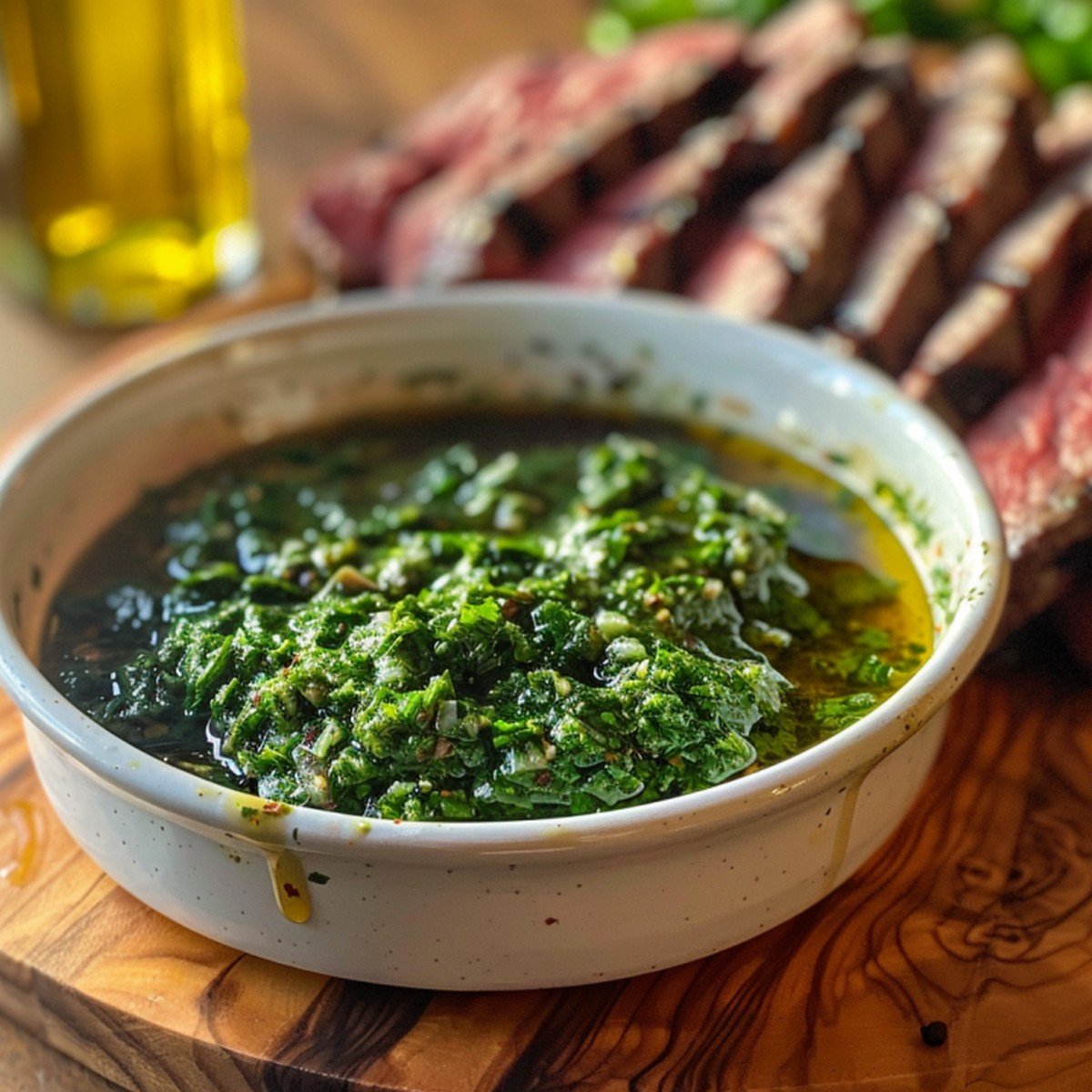
Chimichurri is a chopped herb sauce, not a blended puree. The distinction is everything. When you blend chimichurri smooth, you break down the cell walls of the parsley and release chlorophyll — the sauce turns the right color but loses the freshness and texture that makes great chimichurri distinctive.
Hand-chopped or briefly pulsed parsley keeps the cell structure intact. Each piece releases flavor individually as you eat rather than all at once. You get distinct hits of fresh herb, garlic, and vinegar in each bite rather than a homogenous green paste.
Fresh flat-leaf parsley is non-negotiable. The quantity must be generous — chimichurri is a sauce built on herbs, not oil. The ratio here is herb-forward: the parsley and garlic are the sauce, the olive oil is the vehicle.
Fresh garlic must be minced very fine — almost paste. Large chunks of garlic overwhelm individual bites. Fine garlic distributes evenly and mellows during the 30-minute rest into something rounder and more integrated than raw garlic alone.
Red wine vinegar is the acid backbone. It brightens every ingredient around it and is what makes chimichurri taste like a sauce rather than dressed herbs.
The rest is not optional. Raw garlic in fresh oil is sharp and aggressive. After 30 minutes, it mellows significantly. After one hour, it's integrated and rounded. After overnight, it's exceptional. The rest is where good chimichurri becomes great chimichurri.
This is precisely the texture and flavor balance that defines a great steakhouse chimichurri.
Why You'll Keep Making This
- Zero cooking required
- Works on steak, chicken, shrimp, vegetables, and bread
- Gets significantly better overnight
- Costs almost nothing per batch
- Tastes exactly like a Brazilian steakhouse finishing sauce
What It Tastes Like
Bright and grassy upfront — fresh parsley with a sharp edge of raw garlic that arrives immediately and clearly. Then the olive oil rounds everything out, carrying the herb flavor across the palate.
The texture is chunky and coarse — pieces of parsley and garlic that you can feel. The vinegar is present as a background brightness rather than a dominant note.
What lingers is the red pepper warmth and the garlic — persistent, aromatic, and the exact quality that makes you want another piece of steak to run through the bowl.
Ingredients You'll Need
- 1 cup fresh flat-leaf parsley, packed
- 4 garlic cloves, minced
- ⅓ cup extra virgin olive oil
- 3 tablespoons red wine vinegar
- 1 teaspoon dried oregano
- ½ teaspoon red pepper flakes
- ½ teaspoon kosher salt
- ¼ teaspoon black pepper
Why These Ingredients Matter
Fresh flat-leaf parsley must be fresh and flat-leaf — curly parsley lacks the assertive flavor needed and goes mushy when chopped fine.
Fresh garlic provides the backbone — mince as fine as possible or use the flat-of-knife technique to create a near-paste that distributes evenly.
Extra virgin olive oil carries the flavor and gives the sauce its body. Quality matters here — the oil is the sauce vehicle.
Red wine vinegar is the acid — present but not dominant. It lifts every ingredient around it.
Dried oregano adds a subtle earthy herbal note — fresh oregano is too aggressive here, dried is correct.
Red pepper flakes add warmth without making it spicy — the background heat is essential to the steakhouse version.
How to Make It
Step 1: Chop the parsley Remove all stems. Chop leaves finely by hand — aim for ⅛-inch pieces. If using a food processor, pulse 6–8 times per batch — never blend continuously. The sound of the knife through fresh parsley is one of those kitchen sounds that immediately signals something good is happening.
Step 2: Mince the garlic Mince garlic as fine as possible. For extra-fine results, sprinkle with a pinch of salt and drag the flat of your knife across it repeatedly to create a paste. The garlic paste technique makes the sauce noticeably smoother and more evenly flavored.
Step 3: Combine Add parsley and garlic to a bowl. Add olive oil, red wine vinegar, oregano, pepper flakes, salt, and black pepper. Stir well. It looks loose at this stage — that's correct. It tightens slightly as it rests.
Step 4: Rest Cover and rest at room temperature for a minimum of 30 minutes. One hour is better. Overnight in the refrigerator is best. This is where good chimichurri becomes great chimichurri — do not skip the rest.
Step 5: Final taste and adjust After resting, taste again. Adjust salt, acid, or heat as needed before serving. After the rest, the garlic has mellowed and the vinegar has integrated — it tastes different, and better.
What to Look For
The sauce should be bright green with visible texture. The olive oil and vinegar should be fully incorporated — no separation. When spooned over meat, it should cling slightly rather than running off immediately.
Common Mistakes to Avoid
Blending smooth destroys the textural quality that defines good chimichurri — always chop or pulse briefly. Using dried parsley instead of fresh produces a flat, dusty result with none of the freshness. Not resting means raw garlic that overwhelms rather than enriches.
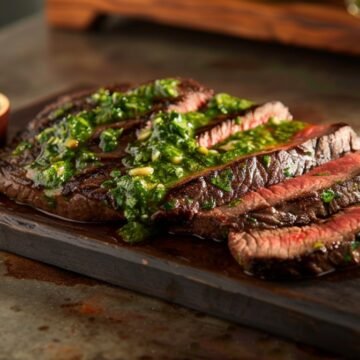
Steakhouse Chimichurri Sauce
Ingredients
- 1 cup fresh flat-leaf parsley packed
- 4 garlic cloves minced
- ⅓ cup extra virgin olive oil
- 3 tablespoons red wine vinegar
- 1 teaspoon dried oregano
- ½ teaspoon red pepper flakes
- ½ teaspoon kosher salt
- ¼ teaspoon black pepper
Instructions
- Finely chop parsley by hand to ⅛-inch pieces. Do not blend smooth.
- Mince garlic as fine as possible — use flat-of-knife technique for paste.
- Combine parsley and garlic. Add olive oil, vinegar, oregano, pepper flakes, salt, pepper. Stir well.
- Rest covered at room temperature 30 minutes minimum. Overnight is best.
- Taste after resting, adjust salt and acid, and serve at room temperature.
Notes
Overnight refrigeration produces significantly better flavor.
Keeps refrigerated 7 days. Always serve at room temperature.
Pro Tips
Make it the day before for best results — 24 hours in the refrigerator transforms the sauce. Always bring back to room temperature before serving — cold chimichurri is muted and the olive oil congeals. Add a tablespoon of finely minced shallot for extra savory depth that steakhouses use in their house versions.
Ingredient Swaps
Half parsley and half fresh cilantro produces a South American style version with more brightness. Sherry vinegar can replace red wine vinegar for a nuttier, more complex acidity. For a milder version, reduce red pepper flakes to ¼ teaspoon.
Make It Your Way
Spicy Chimichurri — double the red pepper flakes and add a fresh minced red chili. The heat builds slowly and complements grilled beef beautifully.
Chimichurri Butter — mix 3 tablespoons into softened butter, roll in plastic wrap, and refrigerate. Slice over hot steak for an instant compound butter with herb sauce depth.
Creamy Chimichurri — stir 2 tablespoons of Greek yogurt into the finished sauce for a creamier, spreadable version that works on sandwiches.
Chimichurri Marinade — thin with an extra tablespoon of olive oil and use to marinate chicken or shrimp for 2 hours before grilling.
Storage & Meal Prep
Store covered in the refrigerator for up to 7 days. The color darkens slightly as it ages — normal and expected. Always bring to room temperature and stir well before serving. Do not freeze — fresh parsley breaks down and the texture becomes mushy.
Common Questions
What's the difference between Argentine and steakhouse chimichurri? Steakhouse versions tend to be more garlic-forward, slightly less vinegary, and sometimes include shallots or a touch of lemon juice. Argentine chimichurri is more vinegar-prominent and often includes dried herbs. Both are excellent — this recipe leans toward the steakhouse profile.
Can I use a food processor? Yes — pulse 6–8 times per batch until roughly chopped, not smooth. Then add the remaining ingredients and pulse 2–3 more times. Never blend continuously.
Why does my chimichurri taste too garlicky? It hasn't rested long enough. Raw garlic mellows significantly during a 30–60 minute rest in oil. If it's still too sharp after resting, add an extra tablespoon of olive oil to dilute.
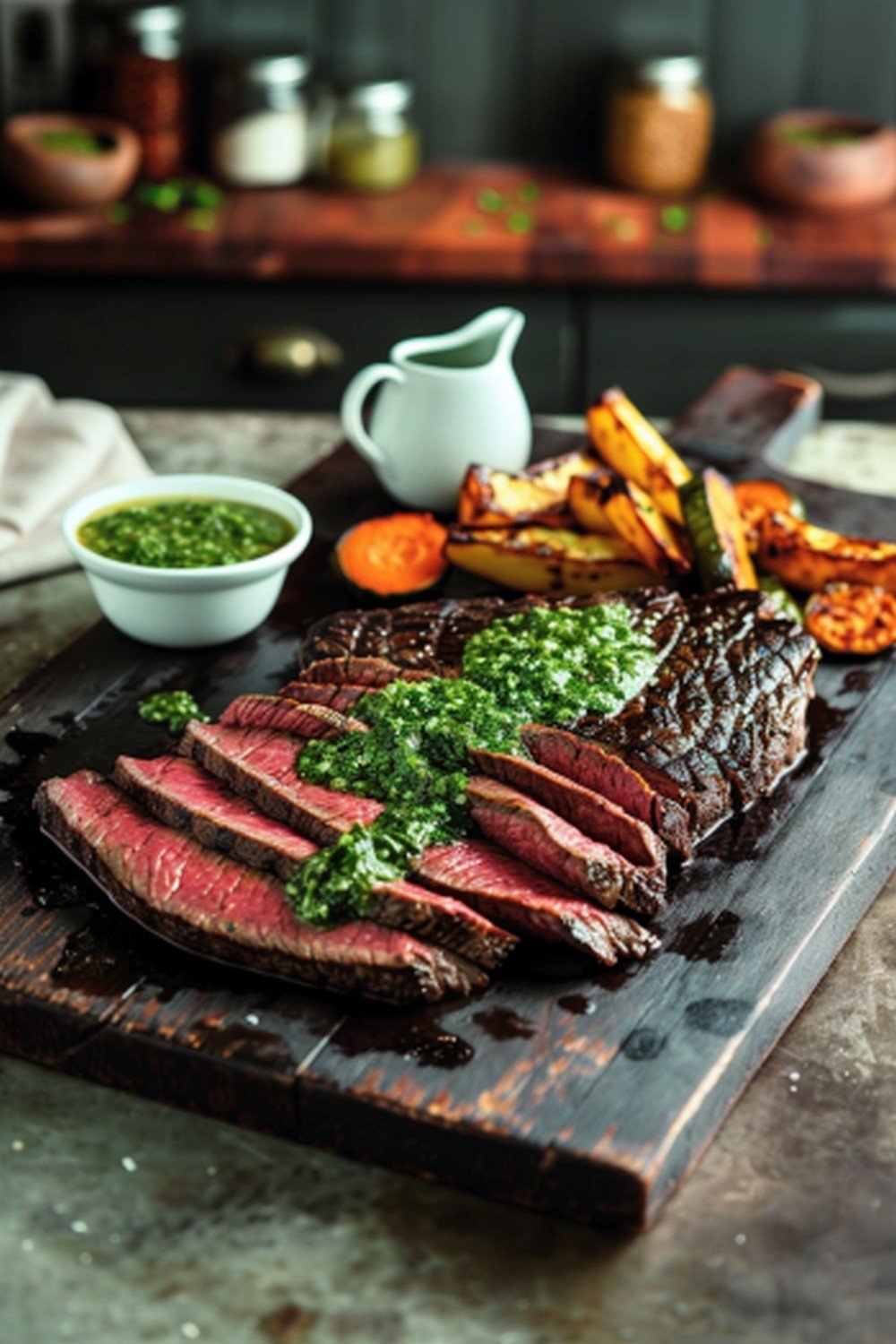
What's the best meat to serve chimichurri with? Skirt steak and flank steak are the classic pairings — their bold, slightly gamey flavor is the ideal match for chimichurri's brightness. It also works on chicken thighs, grilled shrimp, lamb chops, and roasted potatoes.
Can I add fresh lemon juice? Yes — a tablespoon of fresh lemon juice adds brightness without the sharpness of vinegar. Some steakhouse versions use a combination of red wine vinegar and lemon juice.
How much chimichurri should I make per person? Plan on approximately 2–3 tablespoons per person as a finishing sauce. This batch serves 6–8 people as a table sauce alongside grilled protein.
You Might Also Like
- Homemade Texas de Brazil Chimichurri
- Outback Bloomin' Onion Sauce Copycat
- The Applebee's Spinach Artichoke
- 5-Minute Wingstop Lemon Pepper Sauce
- Applebee's Buffalo Chicken Dip Copycat
- Chili's Skillet Queso Copycat
- The Best Wingstop Copycat Recipes at Home
Make a big batch the night before your next cookout. It will be the first thing to run out — and the first thing people ask for the recipe.
Save this before you forget it.

Jake Carter
Crave the restaurant version? I build the at-home one worth repeating.
Recipe developer & copycat flavor obsessive
I recreate the fast-food and restaurant flavors people miss most — then simplify them into recipes that feel doable, nostalgic, and genuinely satisfying at home.
Meet Jake & explore more recipes
Leave a Reply