
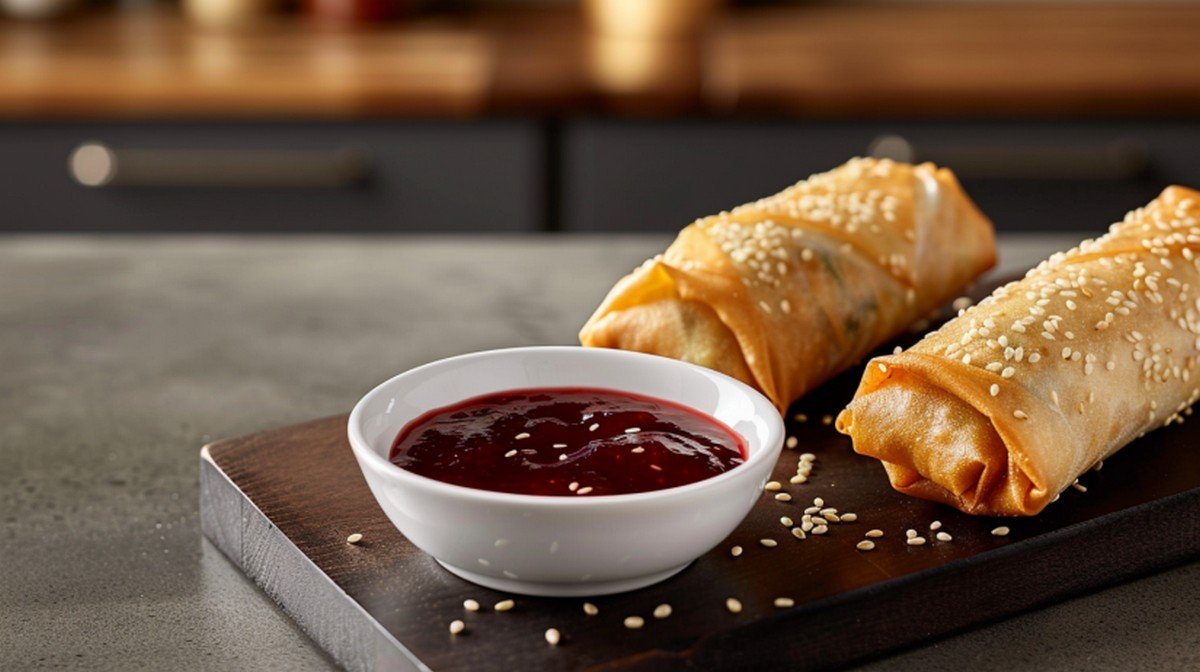
There's a reason plum sauce is the dipping sauce people reach for first at every dim sum table. I made this homemade version on a Saturday afternoon with a jar of plum jam and a handful of pantry spices — and it was better than any bottled version I'd ever opened.
Sweet, fruity, slightly tangy — this is the sauce that makes spring rolls, dumplings, and crispy chicken disappear faster than you can plate them. Here's exactly how to make it.
Quick Answer
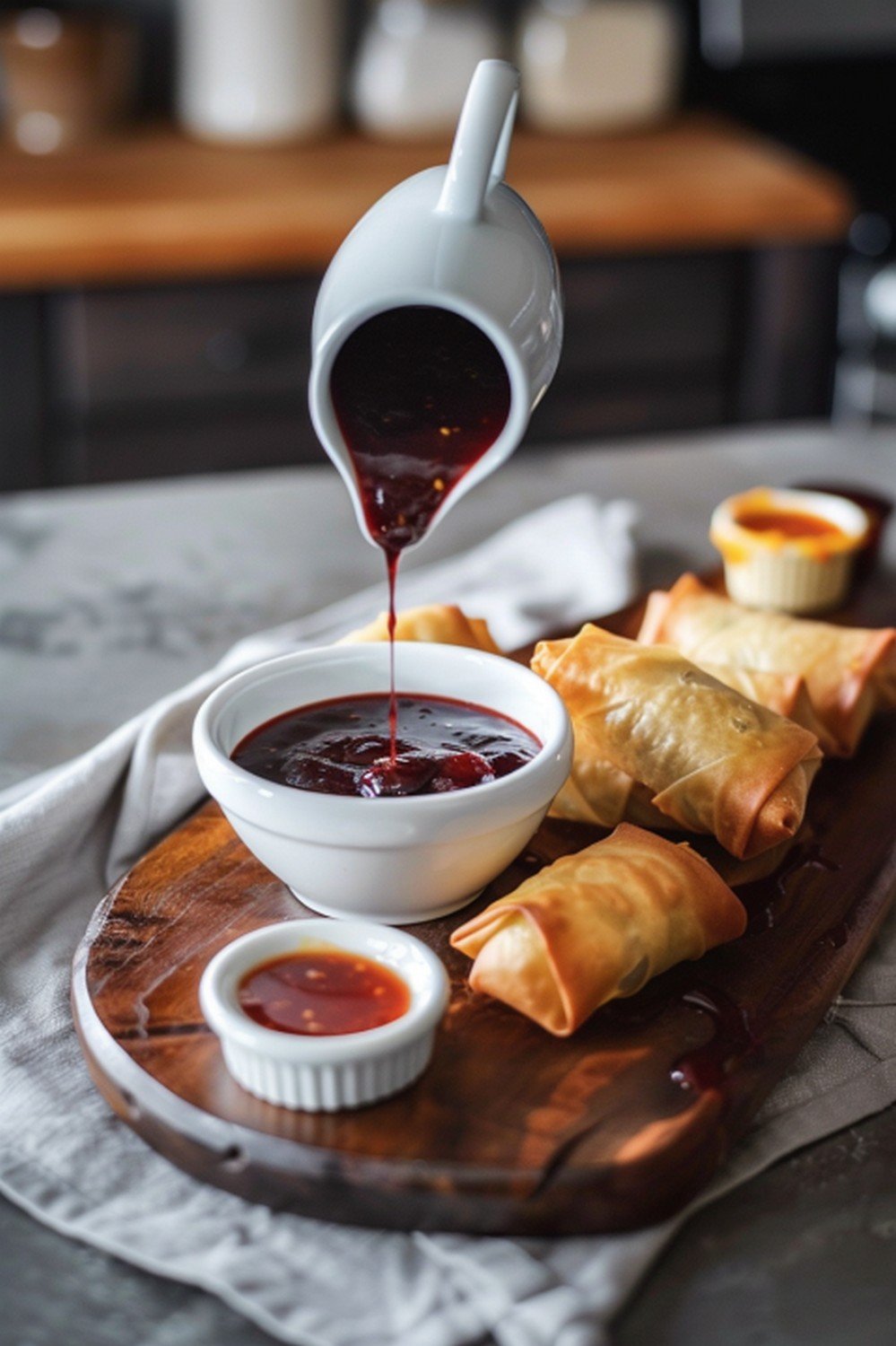
Plum sauce is made by simmering plum jam or fresh plums with rice vinegar, garlic, ginger, soy sauce, and warm spices until glossy, thick, and deeply fruity. It takes 15 minutes and works on spring rolls, dumplings, roast duck, and crispy chicken.
- Best with: Spring rolls — the classic pairing
- Try it on: Crispy chicken for a sweet-savory combination
- Use it for: Dumplings and potstickers dipping sauce
- Pair with: Sweet Chili Sauce — the spicier dipping alternative
- Related: 10 Best Asian Sauce Recipes — the full collection
This is the plum sauce recipe worth saving — sweet, glossy, and better than anything from a bottle.
Why This Recipe Works
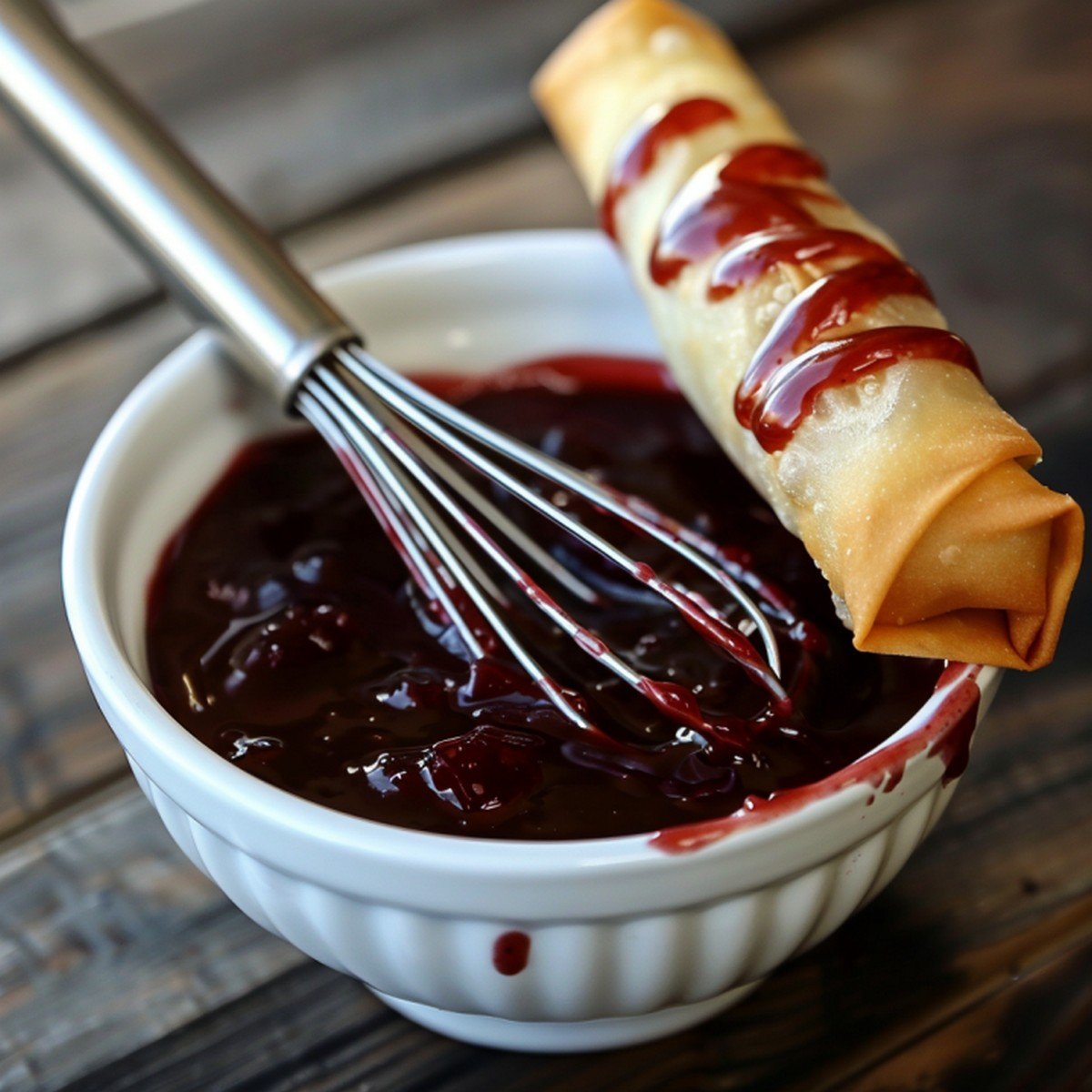
Most homemade plum sauce recipes are either too sweet or too sharp. This one gets the balance right by using two acids — rice vinegar for brightness and a small amount of soy sauce for savory depth — against the natural sweetness of plum.
Plum jam is the efficient base here — it already has concentrated plum flavor and natural pectin that helps the sauce thicken without long simmering. Fresh or canned plums work beautifully too for a more textured, rustic result.
Garlic and ginger go in early to build an aromatic base that grounds the fruity sweetness. Five spice powder adds the signature warm, complex spice note — cinnamon, star anise, clove — that makes this unmistakably Chinese in character without being overwhelming.
A brief simmer of 10–12 minutes is all you need — the sauce thickens naturally as it cooks and develops a beautiful glossy sheen that makes it visually irresistible as a dipping sauce.
This is exactly what gives it that restaurant-quality fruity depth that makes people dip their spring rolls twice every single time.
What It Tastes Like
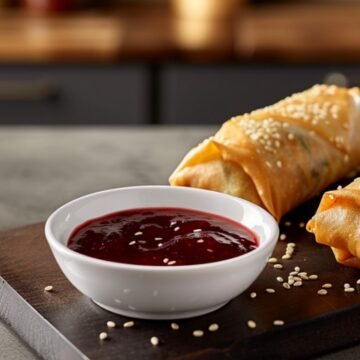
The texture is smooth and glossy — thick enough to coat a spring roll without dripping, loose enough to pool beautifully in a dipping bowl and catch the light.
The first bite opens with bright, sweet plum — fruity and fragrant, with a warmth underneath from the five spice that builds slowly. The rice vinegar adds a clean, slightly sharp tang that cuts through the sweetness perfectly, and the soy sauce adds a savory baseline that prevents it from tasting like fruit preserve.
The finish is warm, sweet, and lightly spiced — the kind of sauce that makes every dippable thing taste better by association.
Why You'll Keep Making This
- Ready in 15 minutes with pantry ingredients
- Smooth, glossy, and visually stunning in a dipping bowl
- Works on spring rolls, dumplings, chicken, roast duck, and pork
- Keeps for 2 weeks in the fridge — make a big batch
- Tastes nothing like the bottled version — in the best way
Ingredients You'll Need
- ¾ cup plum jam or plum preserves
- 2 tablespoon rice vinegar
- 1 tablespoon low sodium soy sauce
- 2 garlic cloves, minced
- 1 teaspoon fresh ginger, minced
- ¼ teaspoon five spice powder
- ¼ teaspoon red pepper flakes
- 2 tablespoon water
- 1 teaspoon sugar (optional — only if jam is tart)
Why These Ingredients Matter
Plum jam is the efficient, reliable base — concentrated plum flavor with natural pectin that helps the sauce thicken quickly. Use a good quality jam with real fruit pieces for the best flavor. Fresh plums work beautifully in peak season — use 3–4 ripe plums, pitted and chopped, and increase simmer time to 20 minutes.
Rice vinegar adds the bright, clean acidity that balances the sweetness of the plum. Don't substitute with white vinegar — it's too sharp and lacks the subtle sweetness that rice vinegar brings.
Five spice powder is the ingredient that makes this unmistakably Chinese in character. Use sparingly — ¼ teaspoon is exactly right. More and it overwhelms the plum flavor entirely.
Soy sauce adds savory depth and prevents the sauce from tasting like fruit jam. It's the ingredient that transforms this from sweet preserve to proper dipping sauce.
Red pepper flakes add a subtle background heat that most people can't identify but would immediately notice if missing — it keeps the sweetness from becoming cloying.
How to Make It
Step 1: Build the Aromatic Base
Combine minced garlic, fresh ginger, five spice powder, and red pepper flakes in a small saucepan with 2 tablespoon of water over medium heat. Cook for 60 seconds, stirring constantly, until fragrant and the garlic just begins to soften.
That warm, spiced aroma from the five spice and garlic blooming together is the moment this starts smelling like a proper Chinese kitchen.
Step 2: Add the Plum Base
Add plum jam, rice vinegar, and soy sauce to the saucepan. Stir everything together until the jam melts into the liquid and the mixture is smooth and combined. Taste and add sugar if the jam is particularly tart.
The sauce will look thin at this point — the simmer is what transforms it into that glossy, thick dipping sauce.
Step 3: Simmer and Thicken
Bring to a gentle simmer over medium-low heat. Cook uncovered for 10–12 minutes, stirring occasionally, until the sauce thickens to a glossy, coating consistency. It should coat the back of a spoon cleanly and hold its shape when drizzled.
Watch the sauce shift from liquid to glossy — that sheen developing on the surface is exactly the sign it's ready.
Step 4: Cool and Serve
Remove from heat and let cool for 5 minutes. The sauce will thicken further as it cools. Serve warm or at room temperature as a dipping sauce. Transfer to a jar for storage.
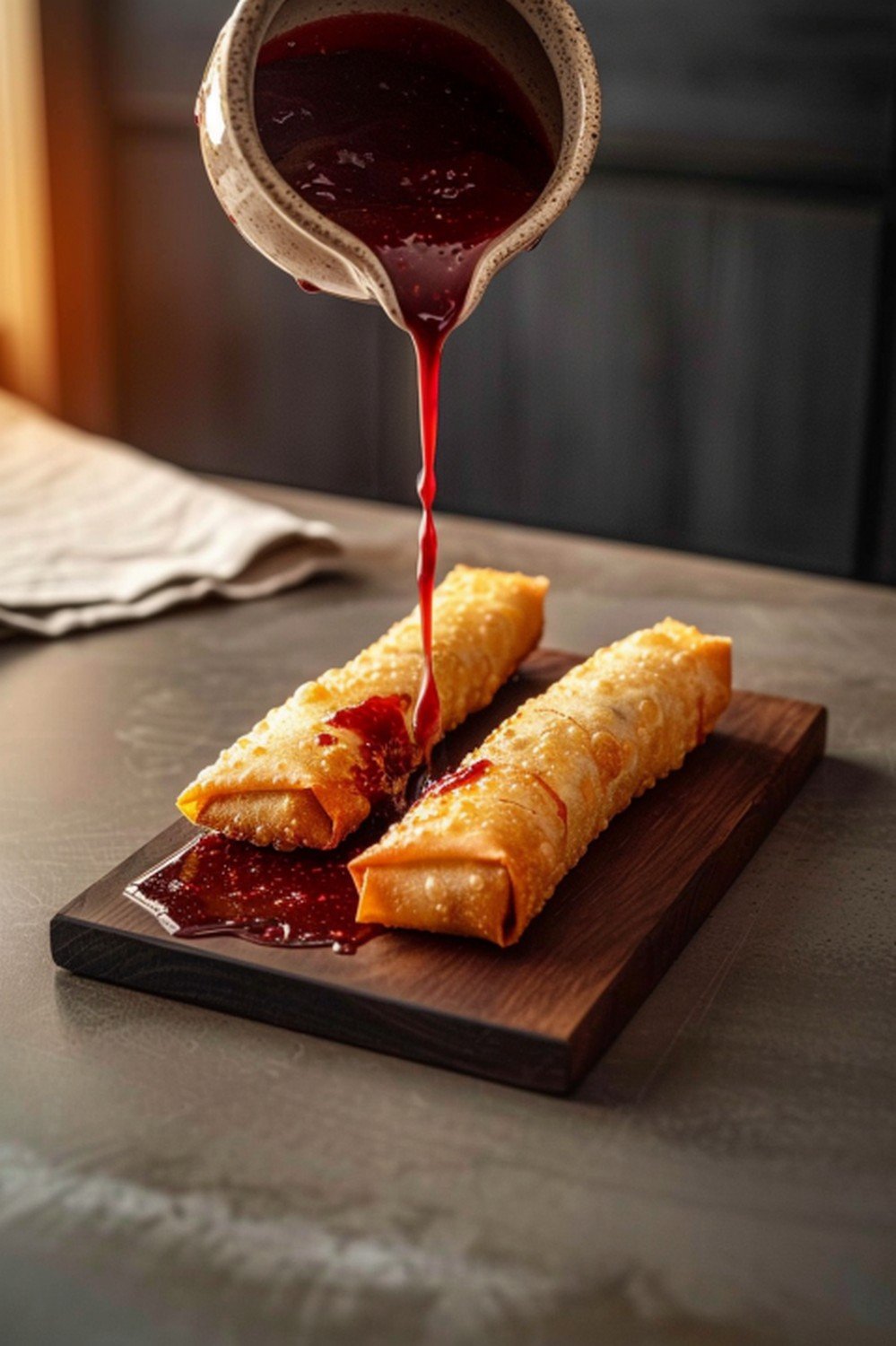
That glossy, deep burgundy-red sauce in a small white dipping bowl is one of the most visually beautiful things you can put on a table.
What to Look For
The finished plum sauce should be glossy and deep burgundy-red in color — smooth with no visible chunks unless you prefer a rustic texture. It should coat the back of a spoon clearly and fall in a slow, steady drip rather than running off immediately. Too thin — simmer 3 more minutes. Too thick — add 1 tablespoon water and stir.
Common Mistakes to Avoid
- Using too much five spice — it's intensely flavored and overwhelms the plum at anything over ¼ tsp. Measure carefully and taste before adding more.
- Simmering on too high heat — plum jam scorches quickly at high heat. Medium-low and patient stirring is what gives you the smooth, glossy result.
- Not letting it cool before judging thickness — plum sauce thickens significantly as it cools. Always taste and assess after 5 minutes of cooling before deciding to reduce further.
Plum Sauce
Ingredients
- ¾ cup plum jam or plum preserves
- 2 tablespoon rice vinegar
- 1 tablespoon low sodium soy sauce
- 2 garlic cloves minced
- 1 teaspoon fresh ginger minced
- ¼ teaspoon five spice powder
- ¼ teaspoon red pepper flakes
- 2 tablespoon water
- 1 teaspoon sugar optional
Instructions
- Combine minced garlic, ginger, five spice, red pepper flakes and water in small saucepan over medium heat. Cook 60 seconds until fragrant.
- Add plum jam, rice vinegar, and soy sauce. Stir until jam melts and mixture is smooth. Add sugar if needed.
- Simmer uncovered over medium-low heat 10–12 minutes until glossy and thick enough to coat a spoon.
- Remove from heat, cool 5 minutes. Serve warm or at room temperature. Store in sealed jar.
Notes
Sauce thickens as it cools — always assess thickness after 5 minutes cooling.
Keeps 2 weeks in the fridge and improves after 24 hours as flavors meld.
Pro Tips
- Blend for a restaurant-smooth finish — if your jam had chunky pieces, a quick 10-second blitz with an immersion blender after cooking gives you a perfectly smooth, professional result.
- Make it ahead — plum sauce is significantly better after 24 hours as the flavors meld. Make it the day before serving for the best result.
- Serve at room temperature — cold plum sauce loses its glossy texture and the flavor is more muted. Room temperature is the ideal serving temperature for maximum flavor.
Ingredient Swaps
- No plum jam? Apricot jam is the closest flavor substitute — slightly less tart but works beautifully with the same technique and spice profile.
- No five spice? Use a pinch each of cinnamon and star anise powder — not identical but captures the warm spice character without the full complexity.
- No rice vinegar? Apple cider vinegar is the best substitute — similar mild acidity without the sharpness of white vinegar.
Make It Your Way
- Fresh plum version — use 4 ripe plums, pitted and chopped, instead of jam. Simmer for 20–25 minutes until completely broken down, then blend smooth. More complex and fresh-tasting.
- Spicy plum sauce — double the red pepper flakes and add ½ teaspoon of chili garlic sauce for a sweet-heat version that works brilliantly on grilled chicken and pork.
- Plum duck sauce — thin with 2 tablespoon of orange juice and add a pinch of Chinese five spice for a classic duck sauce variation perfect for roast duck or Peking-style dishes.
- Plum glaze — reduce by an additional 5 minutes until very thick and use as a glaze for roasted pork tenderloin or chicken thighs — brush on in the last 10 minutes of roasting.
Storage & Meal Prep
Store in an airtight jar in the fridge for up to 2 weeks. Plum sauce keeps exceptionally well and improves with time as the flavors meld and the spice integrates more evenly. Bring to room temperature before serving for the best texture and flavor.
Freezes well for up to 3 months — thaw overnight in the fridge and stir well before serving. Makes an excellent homemade gift in a small mason jar — add a label and serve alongside homemade spring rolls for an impressive presentation.
Common Questions
What is plum sauce made of?
Traditional plum sauce is made from plums, vinegar, sugar, garlic, and warm spices including five spice powder. This version uses plum jam as an efficient base for the same complex, fruity flavor in a fraction of the time.
What does plum sauce taste like?
Sweet, fruity, and slightly tangy with a warm spice undertone from five spice powder. It's less sharp than hoisin, sweeter than soy, and has a distinctive plum fruitiness that makes it immediately recognizable.
Is plum sauce the same as duck sauce?
Similar but not identical — duck sauce is typically made with apricots and plums and is thinner and sweeter. Traditional Chinese plum sauce uses only plums and has a more complex spice profile. Both are used as dipping sauces for fried foods.
Can I use fresh plums instead of jam?
Yes — use 4 ripe plums, pitted and roughly chopped. Increase the simmer time to 20–25 minutes until the plums are completely broken down, then blend smooth. The result is more complex and slightly less sweet.
What food goes best with plum sauce?
Spring rolls, dumplings, and potstickers are the classic pairings. Crispy chicken, roast duck, pork wontons, and egg rolls also work beautifully. It's also excellent as a glaze for roasted meats.
How long does homemade plum sauce keep?
Up to 2 weeks in the fridge in a sealed jar, or 3 months in the freezer. The flavor actually improves after 24–48 hours as the spices and fruit integrate fully.
You Might Also Like
- Hoisin Sauce — The Bold, Deep Version
- General Tso Sauce— The Best Version
- Panda Express Beijing Sauce — Better Than Any Restaurant
- 10 Best Asian Sauce Recipes That Beat the Bottle
- The Best PF Chang's Copycat Recipes to Make at Home
- 12 Best Pasta Sauce Recipes Organized by Type
- 7 Best Burger Sauces You Need to Try at Home
- 10 Best Sauces for Steak That Beat Any Steakhouse
Final Thoughts
Plum sauce is one of those recipes that takes 15 minutes and immediately makes you wonder why you ever bought the bottled version. Sweet, glossy, warmly spiced, and deeply fruity — it makes everything it touches taste better. Make a jar this weekend and keep it in the fridge all week.
You'll want this saved for later.

Jake Carter
Crave the restaurant version? I build the at-home one worth repeating.
Recipe developer & copycat flavor obsessive
I recreate the fast-food and restaurant flavors people miss most — then simplify them into recipes that feel doable, nostalgic, and genuinely satisfying at home.
Meet Jake & explore more recipes
Leave a Reply